Tuesday, November 29, 2011

Part 16

Manifolds and Carb Install

We've experience nothing but grief with this 6-port engine; nothing seems to fit right. 

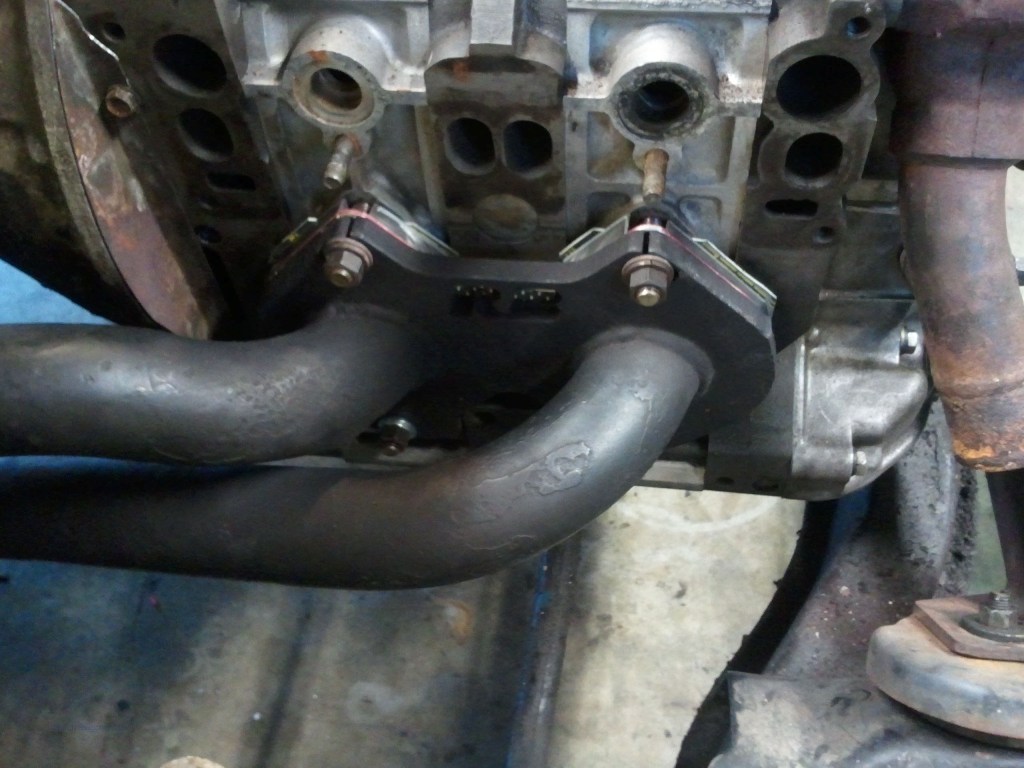
When we tried to mount the exhaust manifold, we found that the Racing Beat manifold doesn't quite fit on the the engine like the stock thermal reactor/afterburner would.  At first, we didn't think this was such a bad thing, but then we noticed that it wasn't covering all the exhaust ports.  There are two smaller ones that are connected to the main ports, but exit the irons a little bit below the main port.  We think they were used to actuate the secondaries on the intake, but we're not certain. In any event, they're no longer needed so we needed to find a way to plug them 

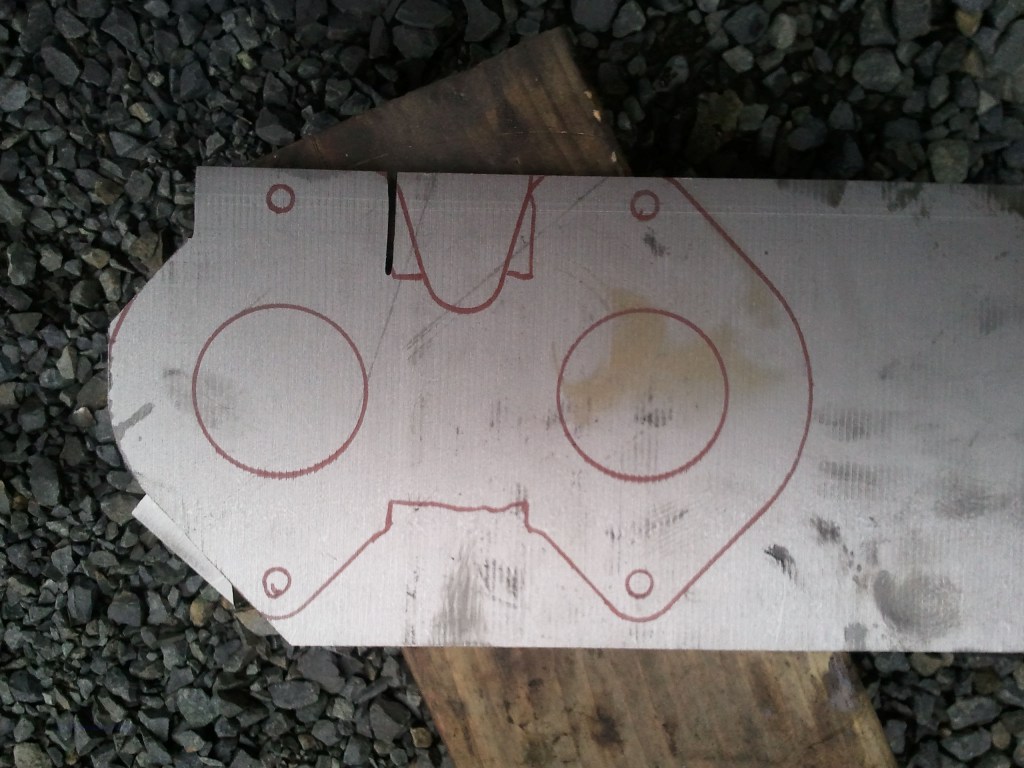
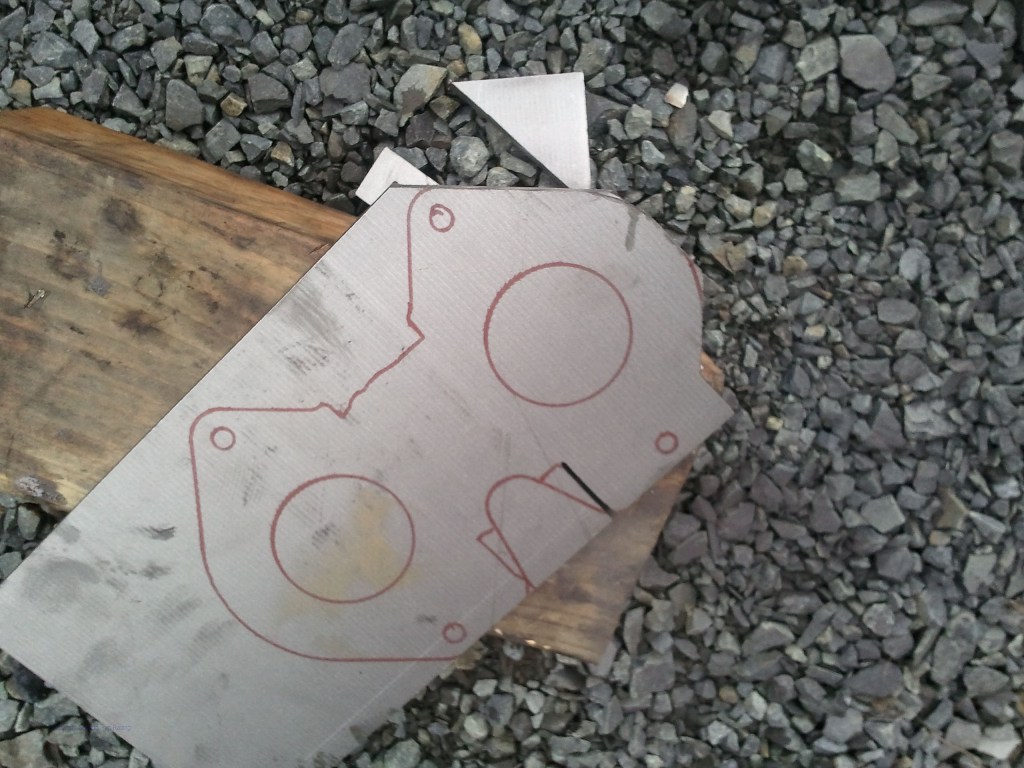
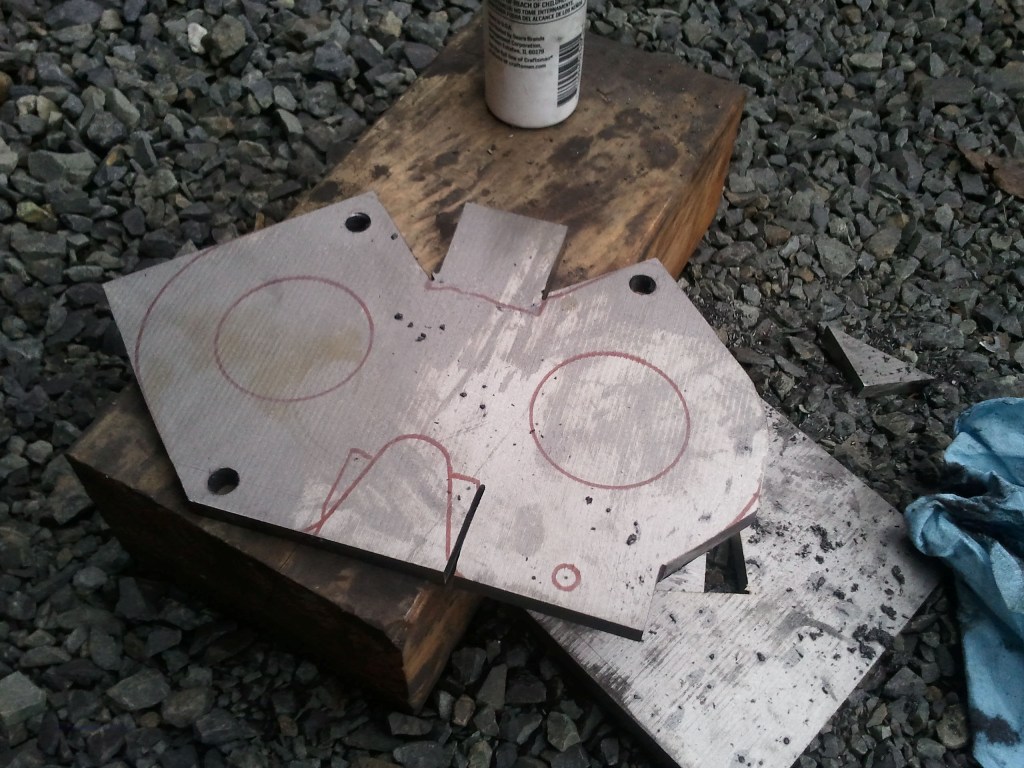
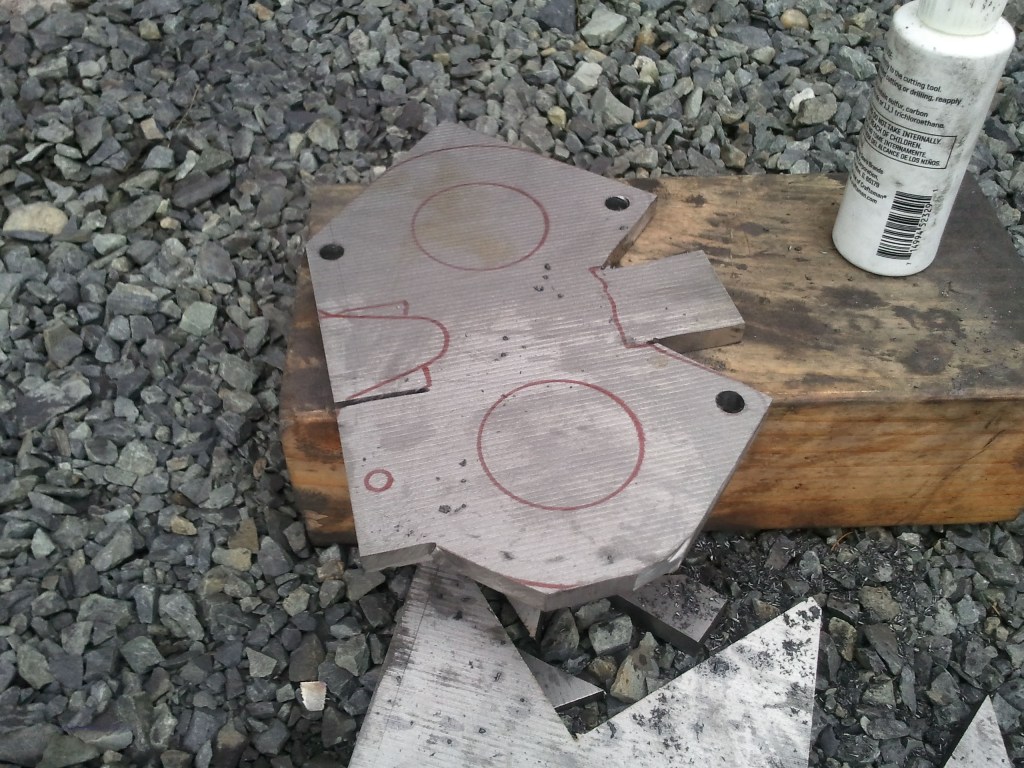
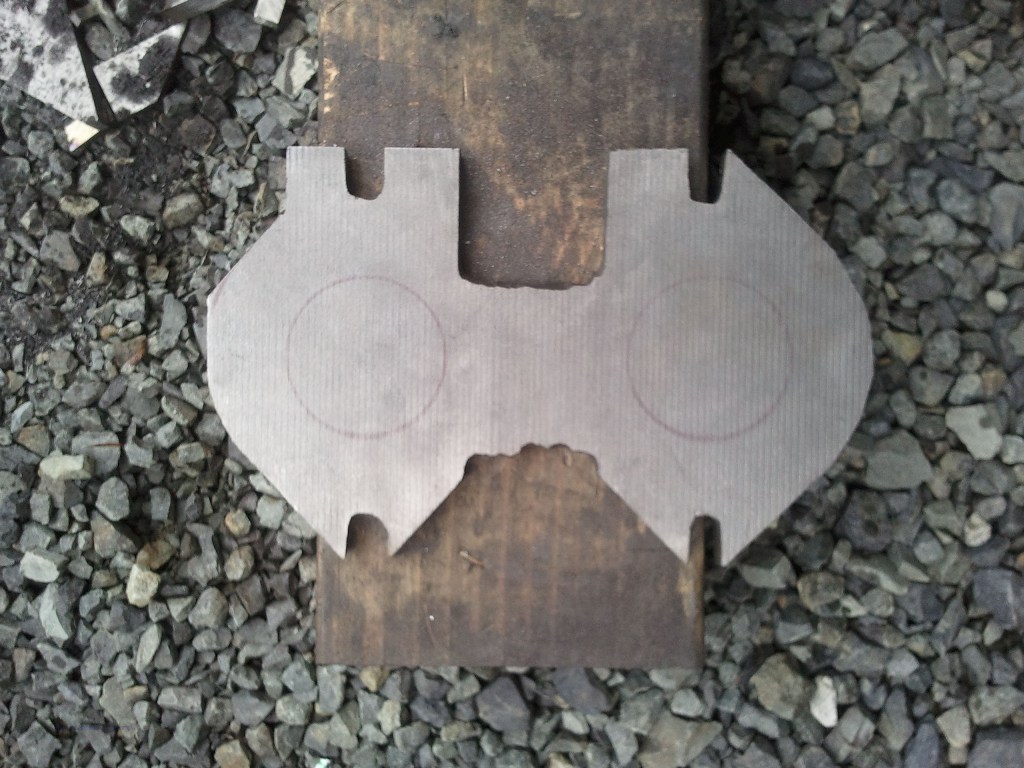
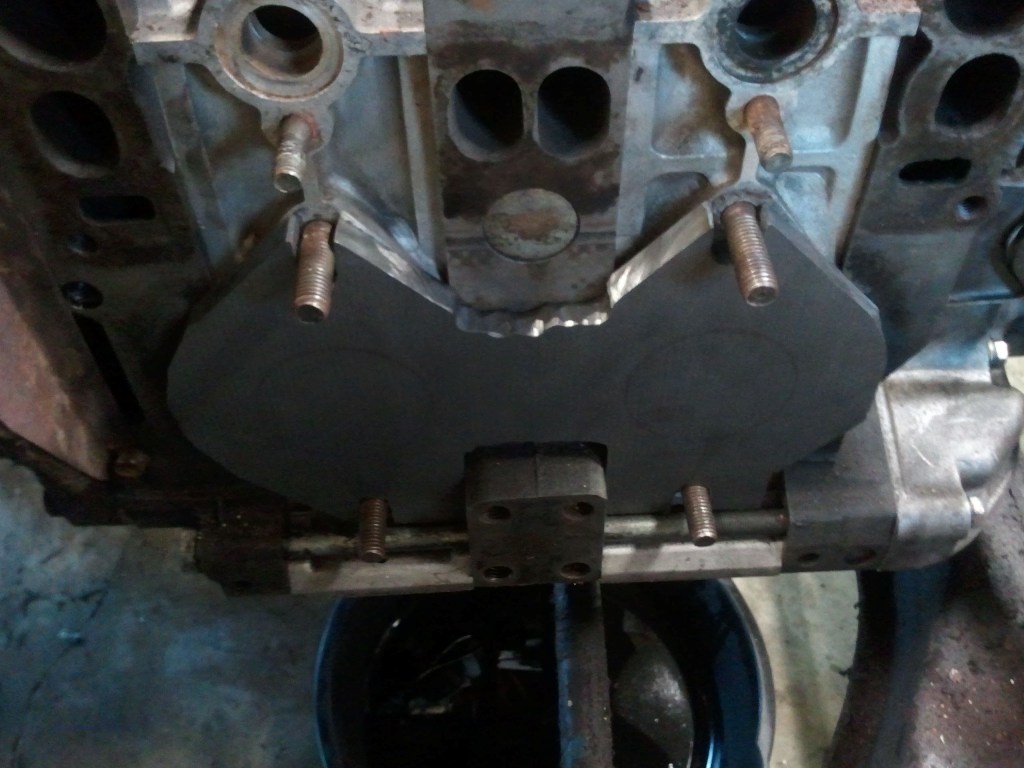
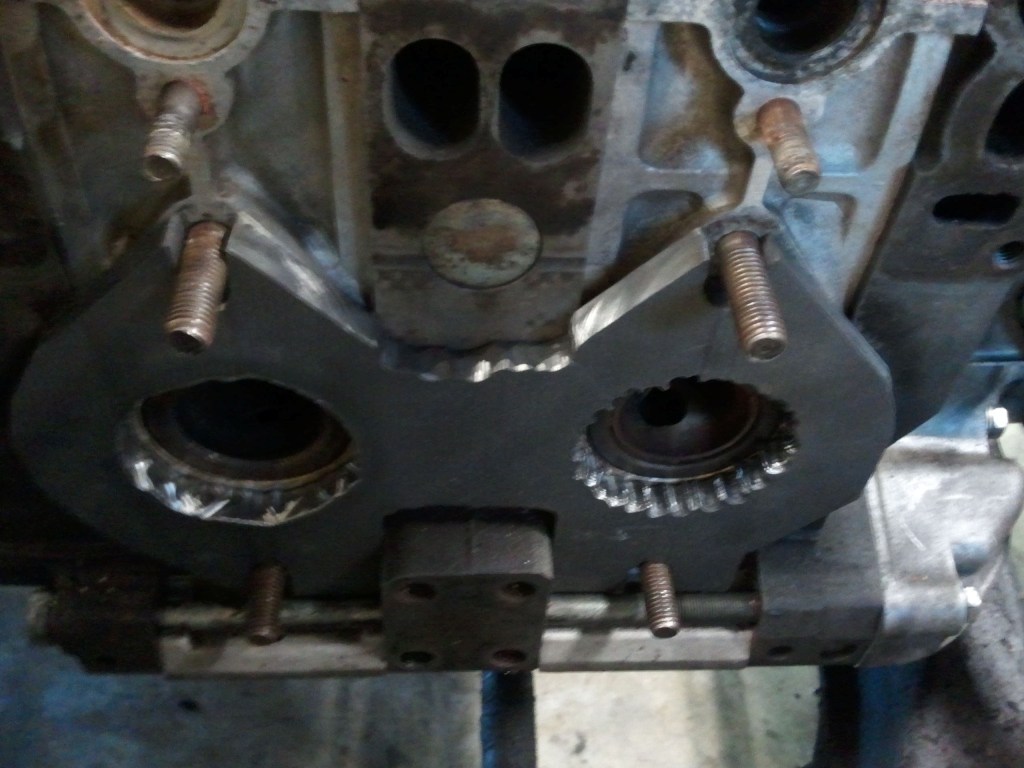
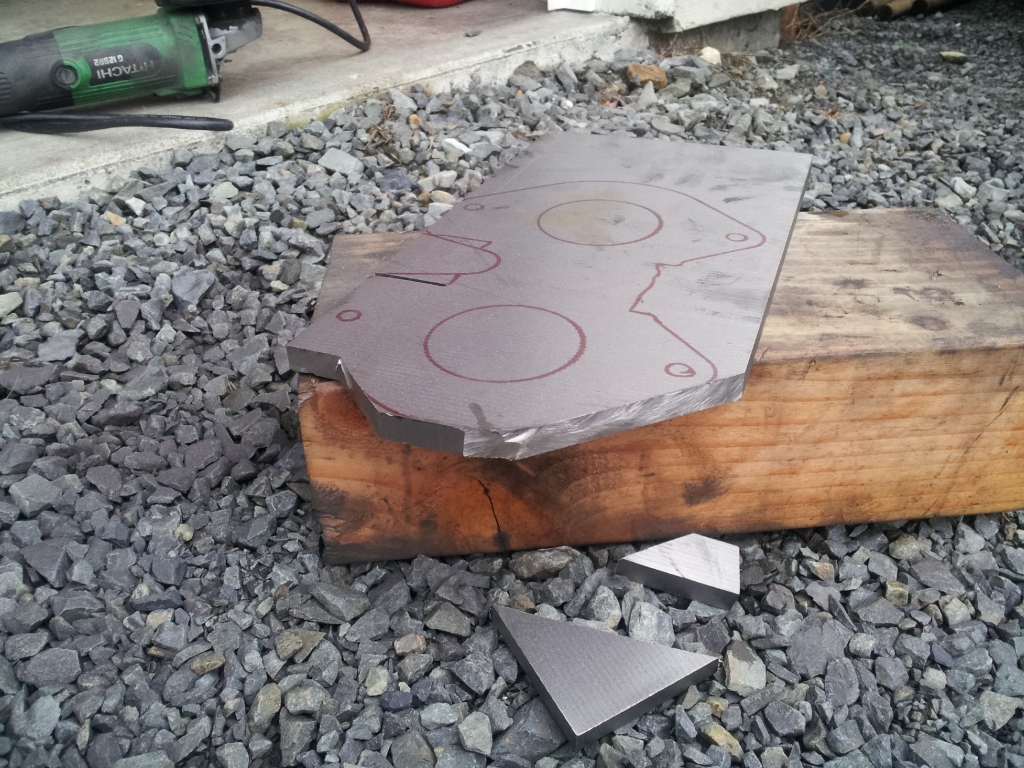
Our idea was to get a piece of metal and make a plate that can be mounted over the studs first, blocking off the extra exhaust ports but leaving the main ports open, then mount the exhaust manifold over that.  Seems simple enough, right?

The main problem is that not any metal will do.  The exhaust gas of a rotary engine is in the neighborhood of 1,700 degrees F; plenty hot enough to burn through most metals given enough time and high RPMs.  The stock exhaust system was specifically designed to deal with the extreme temps: made of iron and weighing as much as a diesel tractor.  We decided on a piece of cast gray iron, which melts at about 2,200 degrees F.

Turns out metal dimensions are a little like wood dimensions (a 2x4 is not 2" by 4", but more like 2 3/4" by 3 1/2"), only in reverse.  We ordered a 1/4" think plate and it turned out to be closer to 1/2". That led to a slight problem with the length of the studs, but we figured out that we could remove them from the block and revers them, giving us extra threaded length where we needed it.

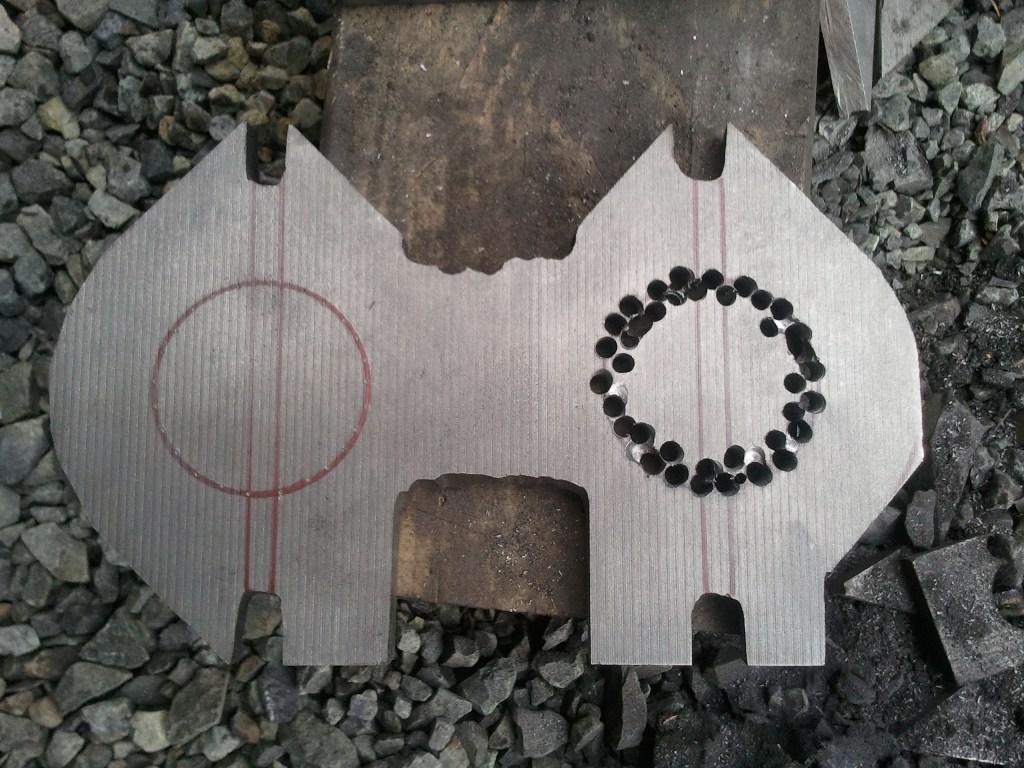
Van set to work on "machining" the plate down to the size and dimensions needed to fit on the studs, and to cover the extra exhaust ports yet leave the mains open.  I say "machining" because he managed to do it all with an angle grinder, a drill, and a hammer - pretty impressive.  It can best be described as...homely.  But it works!  Well, so far it works; we haven't started the car yet...


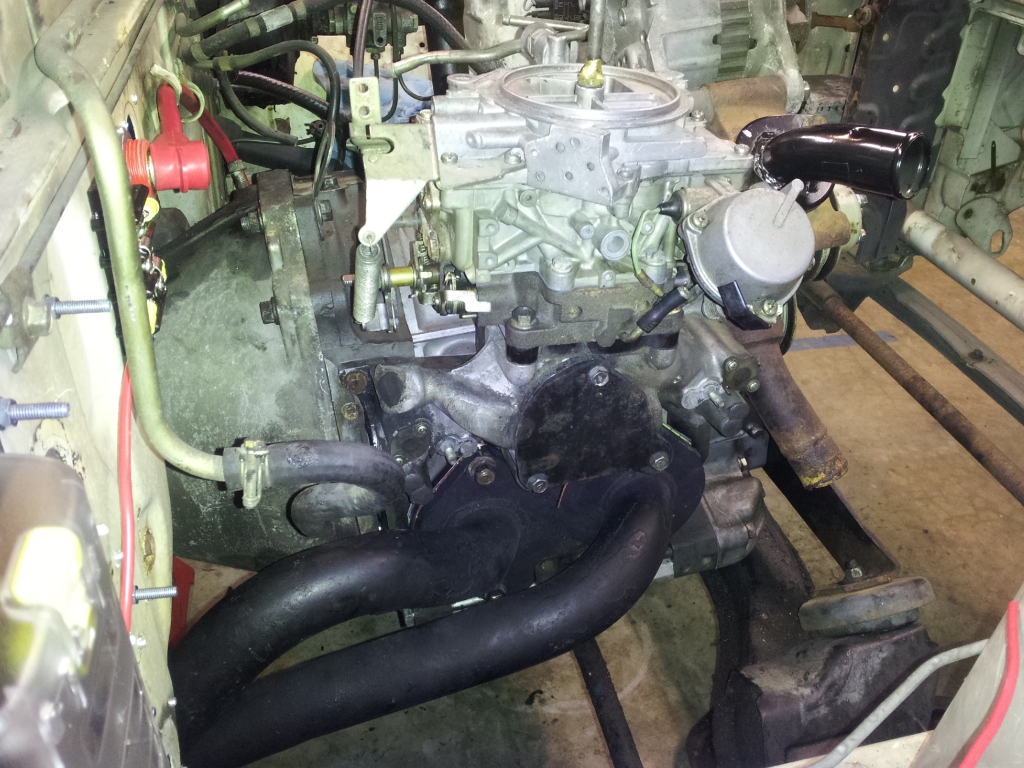
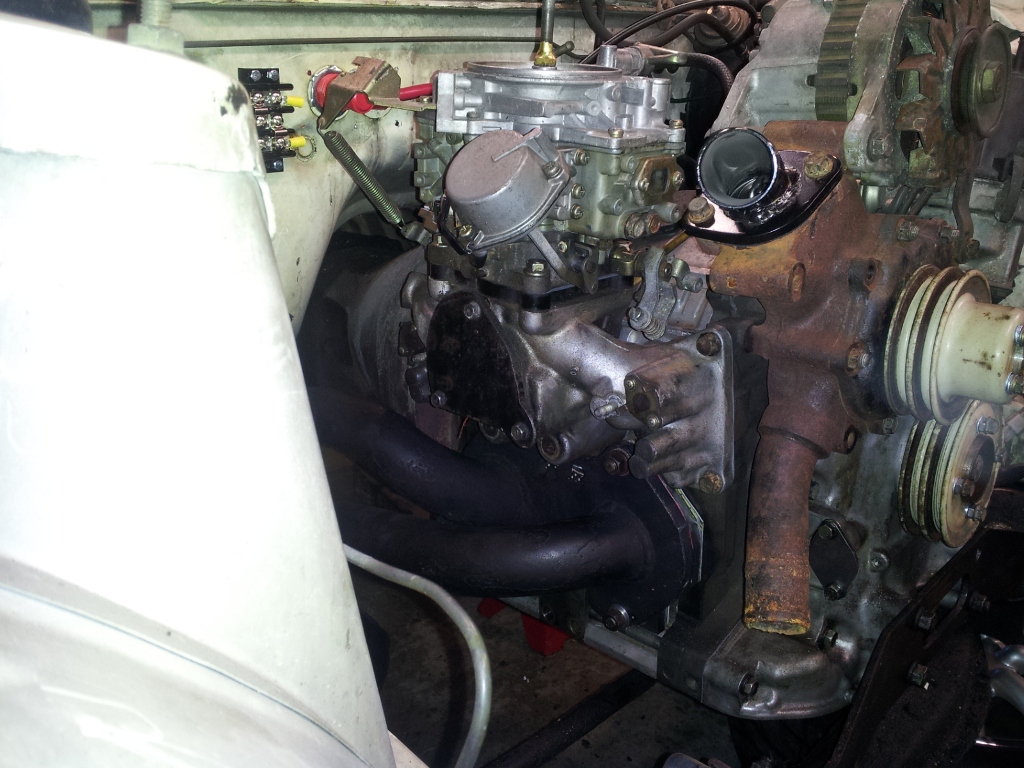
Van was successful in removing the JB weld from the power brake port on the manifold and after chasing the threads out and installing a fitting, we're ready to install.  We getting closer...


Part 15

Engine and Transmission Installation

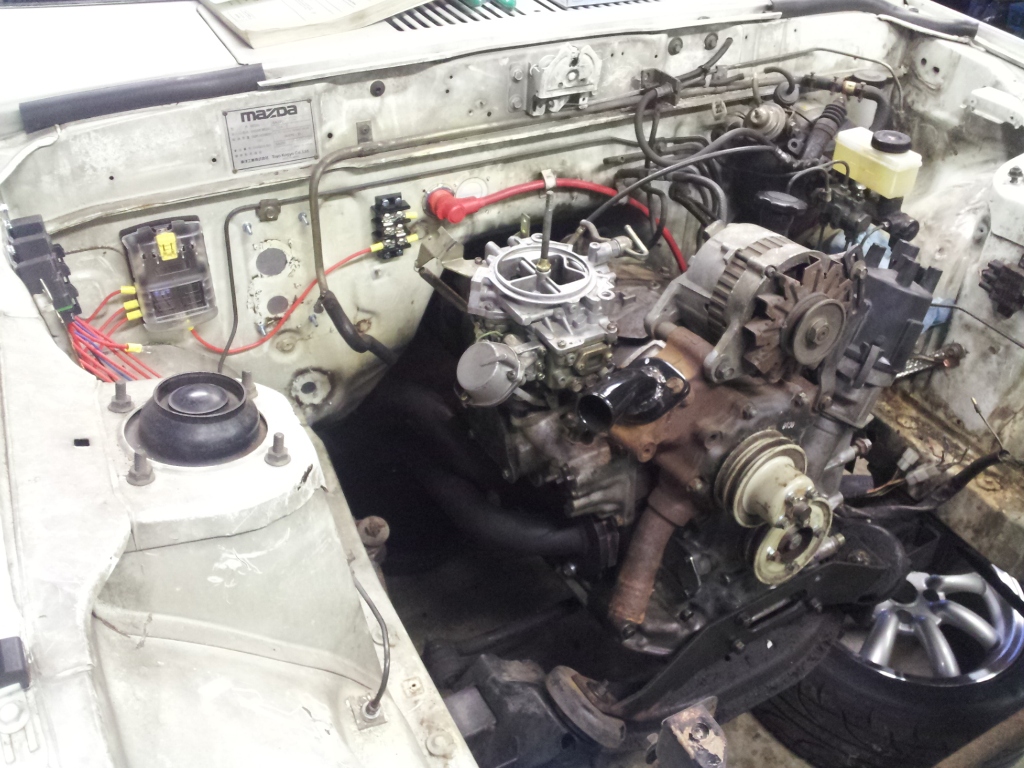
After getting everything cleaned up after the engine removal fiasco, it was time to get the newly-rebuilt engine and new transmission isntalled.  I mounted the new(er) transmission onto the block and hoisted it into position.  I have to say, this was probably the smoothest evolution to date in the assembly of this car.  No sooner had that thought crossed my mind than I noticed that the transmission shifter turret did not line up with the hole in the transmission tunnel.

You. Have. Got. To. Be. Kidding.

Turns out that at some point, Mazda decided that the shifter was too far away from the driver (and to be fair, this was a concern when we were building the car).  While the overall length from input shaft to output shaft was identical to the stock transmission, the turret was set about 6" further back.  To make this transmission work, we'd have to enlarge the whole in the transmission tunnel, and patch part of the original hole with sheet metal.

We decided instead to keep the original transmission, and should be need to use the spare in the future, we'll worry about butchering the floor of the car then.

So what had been a painless engine/transmission installation had to be reversed, and I removed the transmission and isntalled the original, then repeated the whole isntallation again.  Luckily, it doesn't take long and is not particularly very difficult.

Our little race car now has a powerplant again.


Part 14

Intakes and Carburetors

This car started as a California emissions car, which means it had a smog pump, an afterburner, and a whole lot of other emission crap that we absolutely did not need or want (including something lovingly referred to as a "rat's nest").

Before removing anything from this car, we had purchased a JDM (Japanese Domestic Market) 6-port engine, complete with intake and carburetor that had already been de-emissioned.  This is the engine that I'd already rebuilt, but I hadn't done anything with the intake or carb (those were Van's domain).

When it came time to rebuilt the Nikki carb to get it ready to install, Van had second thoughts.  Rebuilding carbs is not really that fun, and he'd found a new intake with dual Dellorto side-draft carbs on the Internet for fairly cheap that was supposed to fit our engine. 

When we finally received them, we went to test fit the intake on the block.  Lo and behold, it doesn't fit!  There's a shock.  Turns out the lower portion of the intake is designed for a 13b engine (we have a 12a), so it won't work.  Looks like someone will be rebuilding a Nikki, after all...

After hours of cleaning and polishing, Van had a newly-rebuilt carb (there are a few pics here).  When he went to test fit, he noticed that the throttle cable bracket appeared to be mounted on the wrong side of the carb.  I realized that this was a JDM motor and carb, and in Japan they drive on the left side of the road, so their cars are right-hand drive.  Will nothing go smoothly on this car?

After a few minutes of disassembly and reassembly, he had it sorted out.  We then noticed that where there should be a port to attache the vacuum boost for the power brake master cylinder, there was nothing but a slug of JB Weld.  Sabotaged at every turn...

Van recalled that the guy we'd bought the engine from had it installed in an MG, which don't have power brakes, so he must have blocked off the hole.  We do have power brakes, and we'd like to keep them!  Van took the intake home and got it all cleaned out, but now we need another obscure fitting to adapt to the vacuum line.

Hopefully it works...

Part 13

Racing Seat and Harness Installation In 90 (or so) Easy Steps -by resident seat and harness expert, Van
I will explain in an easy to follow, step-by-step manner how you too can install a racing seat and six point racing harness. Please allow 3 months for completion.
Warning!!
Installing a racing seat requires the use of dangerous power tools in conjunction with alcohol consumption.  Always use appropriate eye and hearing protection (unless you can’t remember where your goggles are, or you can see them, but they are clear on the other side of the garage and going and getting them is really a hassle), and always use good judgment (for instance, always decide against building a race car).
1)       Spend months agonizing over which seat to buy.  Keep in mind the following criteria:
a.       Drivers come in all shapes and sizes & they all need to fit in the seat,
b.       The seat needs to meet LeMons rules,
c.        You want to be able to install a slider so that the seat is adjustable,
d.       You will need to be able to install a seat back brace. 
Things to worry about later:
e.       The seat needs to fit in the car,
f.         Rule changes may make your purchase obsolete.
When deciding which seat to buy, price is going to be an issue.  It’s tempting to go the less expensive route, but remember, this thing is going to protect your life in the event of an accident.  On the other hand, money you save on a seat purchase can be used to buy beer.
2)       Wait practically forever for the seat to arrive.
3)       Open the big box that the seat has been shipped in.  Bask in its shiny glory.  Enjoy how wonderful the seat looks now because once the installation begins, the polished aluminum glow will fade and you will learn to hate the filthy thing with all your heart.
4)       Go to the hardware store and purchase all the fasteners you will need (nuts, bolts, washers, fender washers, lock washers, locking nuts, & jam nuts).
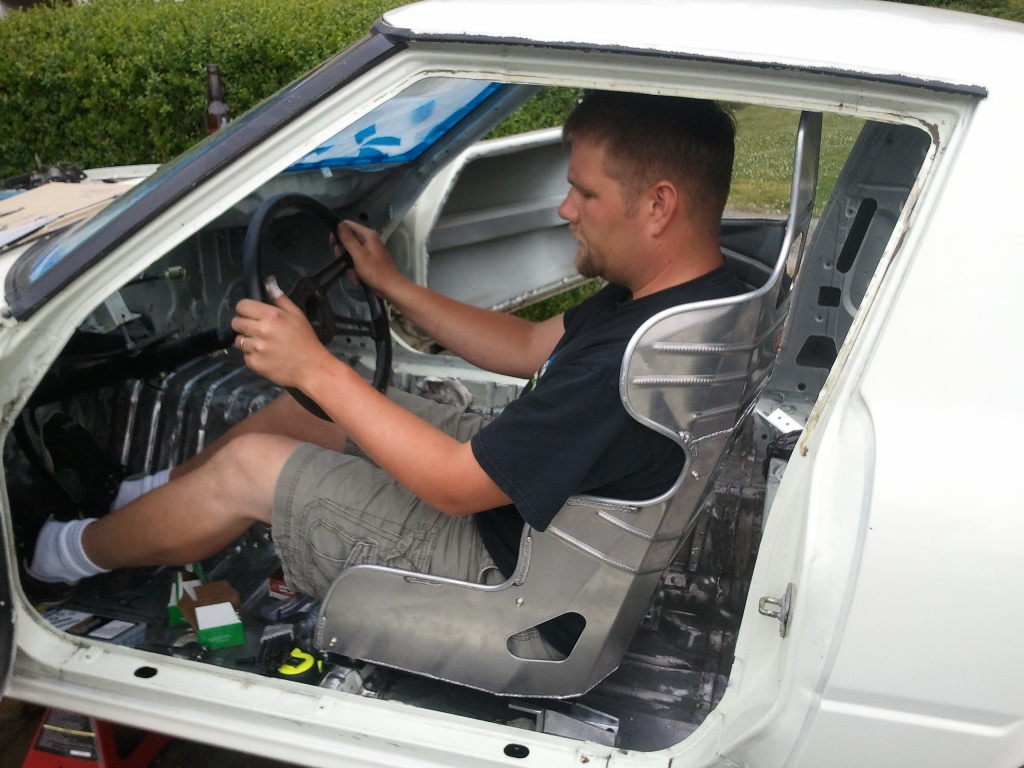
5)       Test fit the seat in the race car.  Take special note that the door won’t close because the seat is too wide. Also note that it seems to sit pretty high in the car.  Probably too high for the driver’s helmeted heads to be within the roll cage.
6)       Remove seat from car.
7)       Cut section out of transmission tunnel and cut rear factory seat mounting bracket out of driver’s floor.
8)       Carefully measure opening in transmission tunnel and fabricate cardboard template to cover hole.
9)       Duplicate cardboard template by painstakingly cutting & trimming a piece of aluminum.
10)   Using a heavy brass hammer and block off wood, pound aluminum into approximate shape to fill hole.
11)   Fasten new transmission tunnel into place using rivets, nuts, bolts, and RTV.
12)   Drink a beer and tell yourself that it’s actually a good thing that your handiwork looks like crap.
13)   Carefully study instructions that came with seat slider assembly.  Marvel at how money and trees have been saved by printing the installation instructions on a 3 inch by 4 inch piece of paper that contains absolutely no useful information (in four languages!).
14)   Spend a couple of hours installing seat sliders to bottom of seat via trial and error.
15)   Install seat mounts to bottom of sliders.
16)   Put seat in car and decide, “Well, that’s never going to work!”
17)   Remove seat from car.
18)   Trim seat mounts to fit better.
19)   Put seat in car.
20)   Remove seat from car and trim more.
21)   Repeat steps 19 & 20 until seat fits (about 200 times).
22)   Put seat back in car and screw around trying to get the thing to line up.
23)   Decide that the fasteners you bought don’t include everything you needed to finish this today and 5 hours of this bullshit is enough for one day.
24)   Drink a beer.
25)   Stop at hardware store to buy more fasteners.
26)   Put seat in car and mark holes for drilling through floor boards.
27)   Remove seat from car and drill holes in floor boards.
28)   Put seat in car and find that the holes don’t line up.  Scratch head and wonder how the hell that could have happened.
29)   Mark additional spots for drilling, remove seat from car, open a beer.
30)   Put seat in car and bolt in.  Discover that the slider allows for almost an entire inch of forward and backward movement!!
Seat test fitment
31)   Take car to roll cage builders.
32)   Figure out team name.
33)   Design team T-shirts.
34)   Wonder if you are ever going to see the car again.
35)   Drink beer.
36)   Today’s the day! Pick up the car from the roll cage builders.
37)   Find out that the seat fit is even tighter than you thought.  Race seat will need to “toe out” at the front in order for driver to clear roll cage.  Cage builder has done you a huge favor though and welded bolts into the factory seat brace so that you don’t need to go through the floor (thanks Doug!)
38)   Take car home and test fit seat.  Discover that new holes will need to be drilled in the floor pan.
39)   Drill holes and wonder at which point the bottom of the car goes from being “a piece of steel with holes drilled in it” to “a big hole with some steel still in the way”.
40)   Mount seat in car.
41)   Have tallest driver get in car and discover that the top of his helmet might be too high.
42)   Email LeMons technical guru for roll cage clearance clarification.
43)   Drink beer.
44)   Check email and find out that seat will definitely need to be lowered.
45)   Remove seat from car.
46)   Remove Slider from seat (that thing was a POS any.  Glad to see it go.).
47)   Attach seat mounts directly to seat and put back in car.  Discover that with the seat sliders gone, you are going to need to drill holes in the seat itself to mount the front of the thing.
48)   Remove seat from car and carefully measure locations for new holes.
49)   Drill new holes and tell yourself that without side windows, a few holes in the bottom of the car will be handy for allowing rain to drain out.
50)   Mount seat in car.

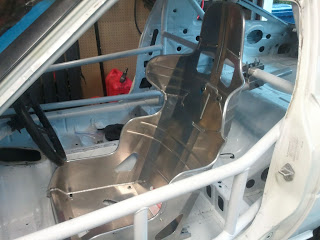
Making the seat fit with the roll cage installed

51)   Rear mounts are too high, remove seat from car.
52)   Take a drink of beer.
53)   Try to get some warmth and feeling into your fingers and wonder where you put your gloves.
54)   Trim mounts and put seat in car.
55)   Repeat steps 51 through 54 until seat fits.    Frozen steel and aluminum will suck the heat right out of your hands.
56)   Have tallest driver get in seat with helmet on and find that clearance is more than adequate.
57)   Success!! Enjoy a beer!!
58)   Find out from further reading of the rules that the seat is now too LOW because shoulder harnesses are coming through the seatback at a down angle.
59)   Give thanks that you still have one seat mount that has not felt the spinning, grinding edge of a cutting disk yet.
60)   Drill more holes, cut more aluminum, and finally wrestle the seat into a position that works inside the car.

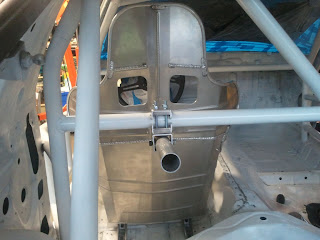
Installing seat back brace

61)   Discover that rather than 8 months until the next LeMons race, you actually have 4 months.
62)   Order racing harness (thankfully you actually researched this before hand and have a pretty good idea of what you need.
63)   Receive racing harness and mounting hardware (ordered separately).
64)   Remove seat.
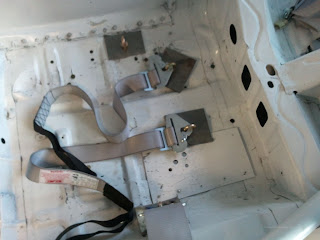
65)   Follow instructions explicitly for mounting of anti-submarine belts.  Hey, that was easy!
66)   Mount seat.
67)   Agonize over locations for lap belts.
68)   Screw that, install the shoulder belts.  Another success.
69)   Decide on lap belt location and remove seat.
70)   Drill your holes.
71)   Attach one lap belt.  So far, so good.
72)   Mount other lap belt…. WTF?  This one is different from the other 5?!  Looks like mounting the final belt will have to wait.

Oddball lap belt connector.
73)   Drink a beer.
74)   Luckily, CR is there and works with guys that fabricate stuff from steel all day long.  Even more luckily, CR brought over a couple of growlers of micro-brew.
75)   Attach lap top belt with zip ties and try harness.
76)   Drink some micro-brew.   That’s the stuff!
77)   Anti-submarine belts don’t reach and mounts will need to be moved forward.
78)   Remove seat and relocate anti-submarine mounts.

Anti-submarine belt installation, take 2.  Actually took 3 tries as the 3” inch harness clips needed to be replaced with 2” harness clips.  How many holes can you count?

79)   Drink some micro-brew.
80)   Install seat and check anti-submarine belt length.  That’s close.
81)   Send CR a drawing of what you need fabricated.
82)   Get bracket from CR.  Thanks CR!!
83)   Install new bracket.  Works perfect!
84)   Install se… WTF?  New bracket is interfering with the right rear seat mount.
85)   Remove seat and trim seat mount.
86)   Test fit seat.
87)   Repeat 85 & 86 until seat fits.
88)   Install seat for the last time (Ha!).  Job complete!!
89)   Find the gloves that you were missing in step 53.
Success!

Bask in the glory.  Sure, the seat no longer has that “brand new” look that it had when you bought because you drilled a bunch of holes in it, and you don’t have any use at all for that fancy Italian slider, and the aluminum mounting brackets have been cut more times than -----------------, but the job is done.  And done well!  Well enough, anyway.

That’s the abridged version.  In actuality, the seat was removed and installed in the car absolutely no less than 100 times.
Part 12

Engine Removal

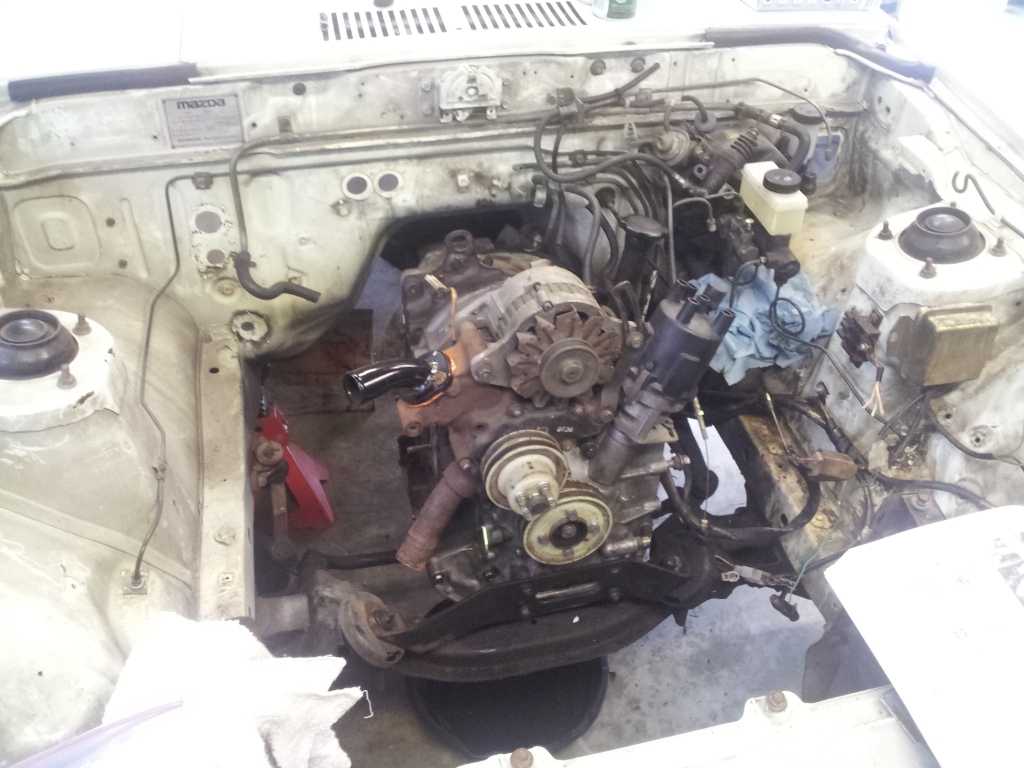
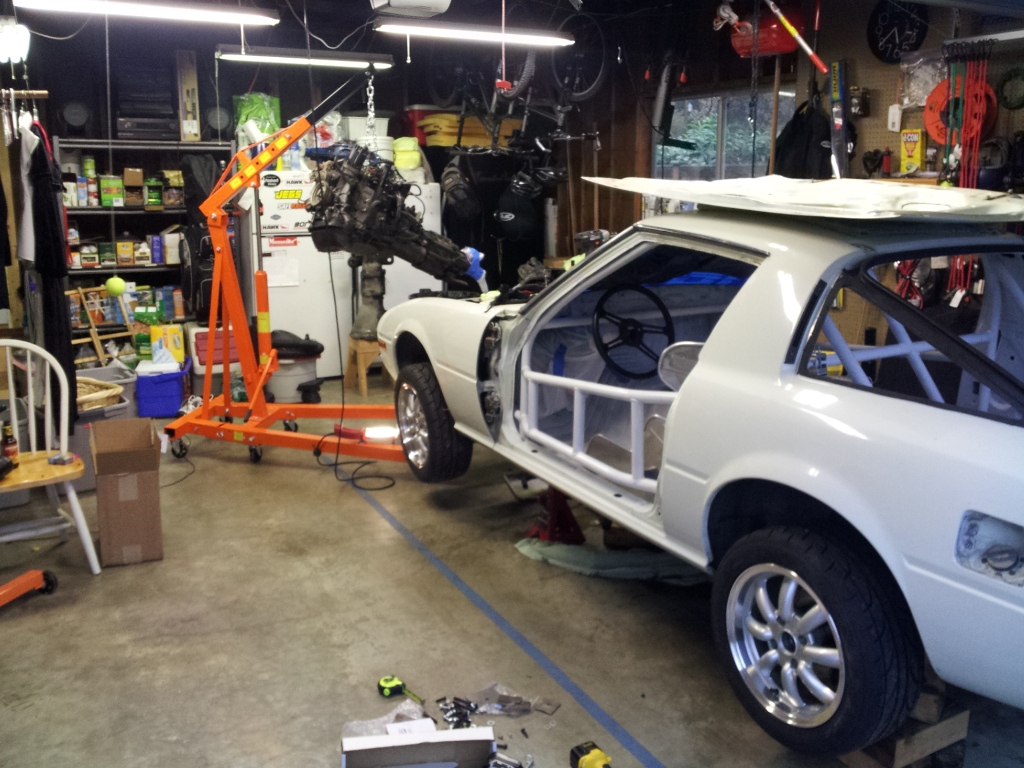
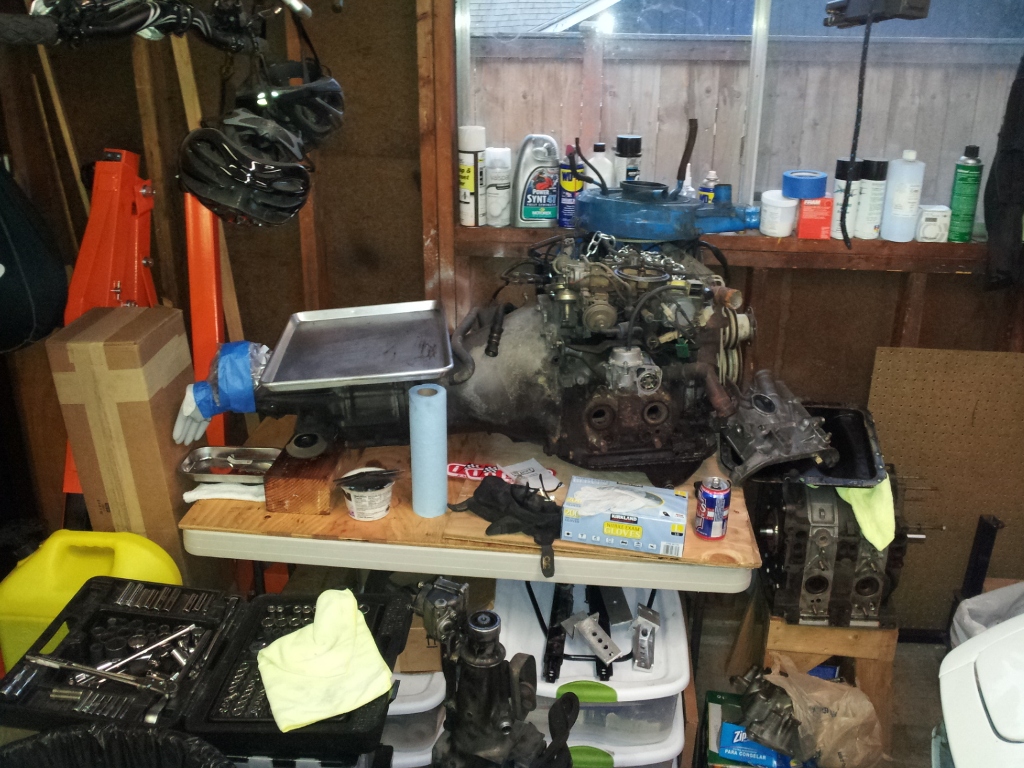
We finally got the opportunity to pull the original engine and transmission from the car.  The way the car is designed, there are only two points where the engine/trans assembly is bolted to the car: one cross brace under the middle of the transmission and one cross brace at the front of the enging.  After removing the most of the electrical stuff during teardown of the car, it was fairly painless to get the engine and transmission loose. 

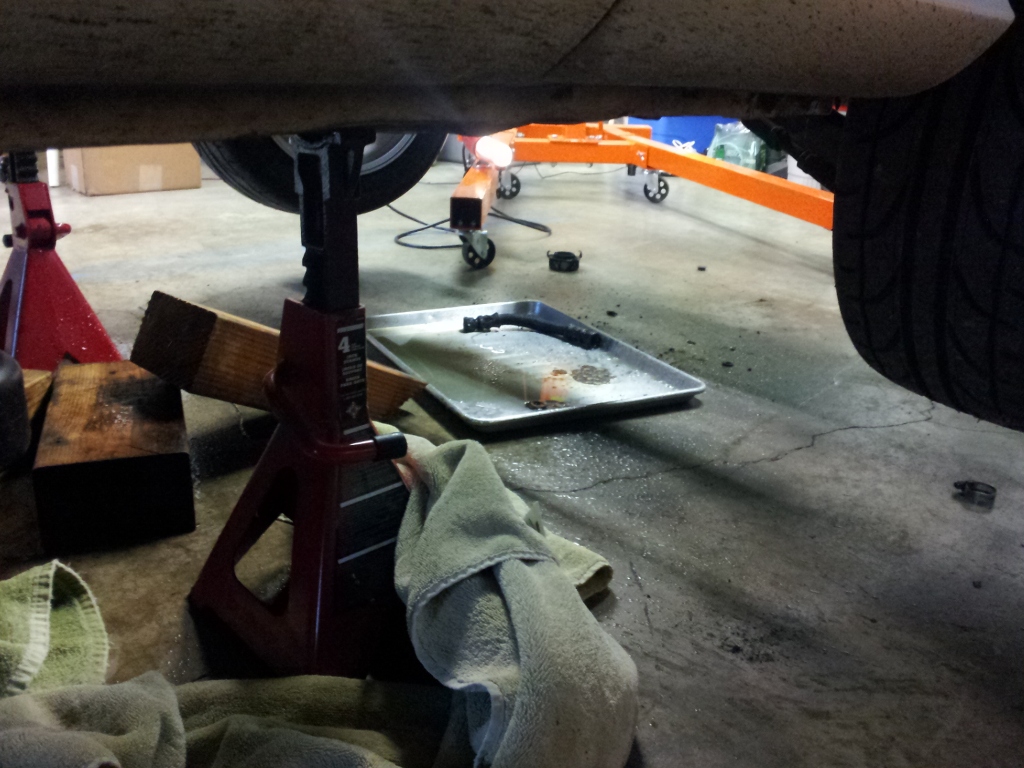
After attaching the engine hoise and getting a little tension on it, I removed the bolts on the engine mount, then loosened the two nuts attaching the transmission cross brace to the chassis.  What I failed to consider before removing those nuts is that the freaking thing is HEAVY, even just the tail end of it.  And I hadn't removed the shifter and boots and shifter so the transmission dropped as far as the shifter boots would let it, the drive shaft came out of the transmission, and tranny fluid proceeded to spill out all over the garage floor under the car.


If you've ever smelled transmission fluid or gear oil, you know that it smells pretty awful; very sulfery.  Once you get it on you, it takes a few days to get the smell off, no matter how much you wash.  For those who have their laundry machines in the garage, your clothes get to smelling like sulfer, too.  That's nice.

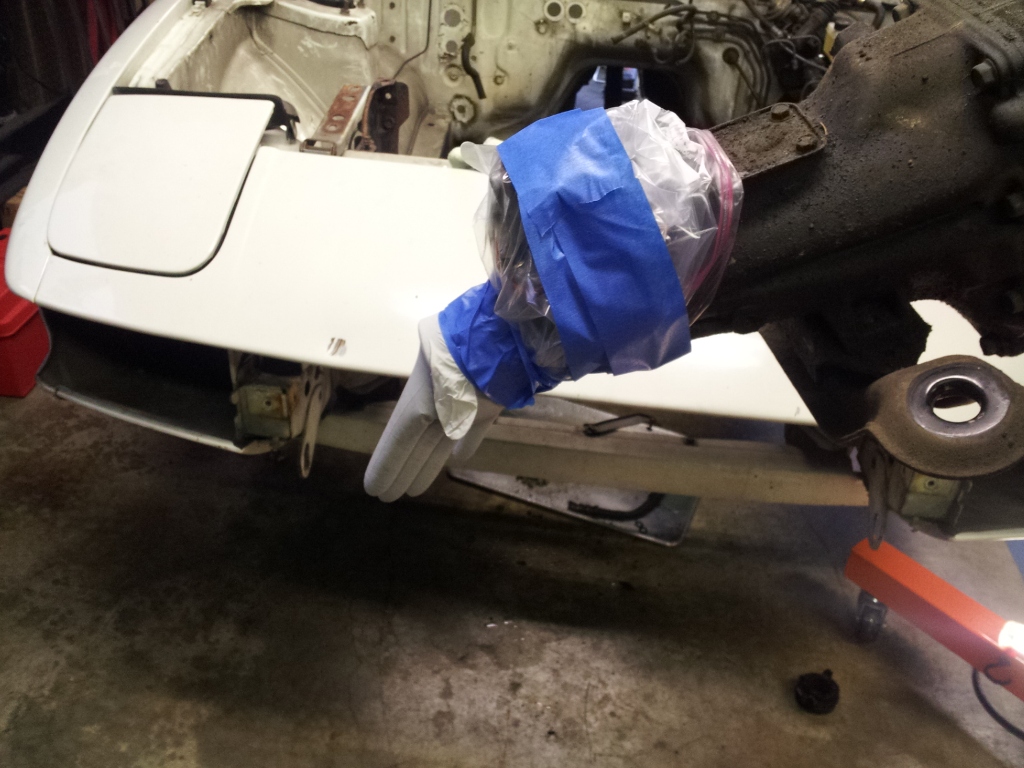
So after most of the fluid had drained out, I slapped a rubber glove over the end like a cow's udder and secured it with some tape.  Problem (temporarily) solved.  I then removed the fasteners on the shifter boot and pulled the shifter out of the transmission and covered the turret with a bag to keep crap from falling into it.

We lifted the engine and started pulling it forward and up out of the engine bay.  That's when the coolant (which I thought had been completely drained) gushed out, adding to the gear oil puddle on the floor.  Par for the course... 


Damage done, we finished pulling the engine. 


It's after 5pm, less than 40 degrees, and I've had enough go wrong for one day.  I cleaned up my mess and called it a day.

Monday, November 28, 2011

Update

After receiving the good news regarding the schedule change, and the loss of four months of build time until our first race, we've been wrenching away trying to get he car back together.  I will be posting soon regarding transmission woes, intake manifold heartbreak, and harness grief; all replete with photographic evidence. We're still waiting for things to start going right.

By the way, a special thanks to Linda Caywood, our one and only non-team-associated, confirmed reader!  I know it sounds like you should win a prize or something for that, but you don't. Sorry.

Monday, November 14, 2011

Breaking News!!!

The first draft of the 2012 schedule has been released and it looks like we'll have at least two races to run next year.  The first race is Portland International Raceway and the second is at The Ridge Motorsports Park.  The bad news is that it's very likely that our first race has been moved up from June to February; that gives us just about 90 days to complete the build on this car.

Oh well; we weren't using those nights and weekends, anyway...

Monday, November 7, 2011

Part 11


Return from Chase Race

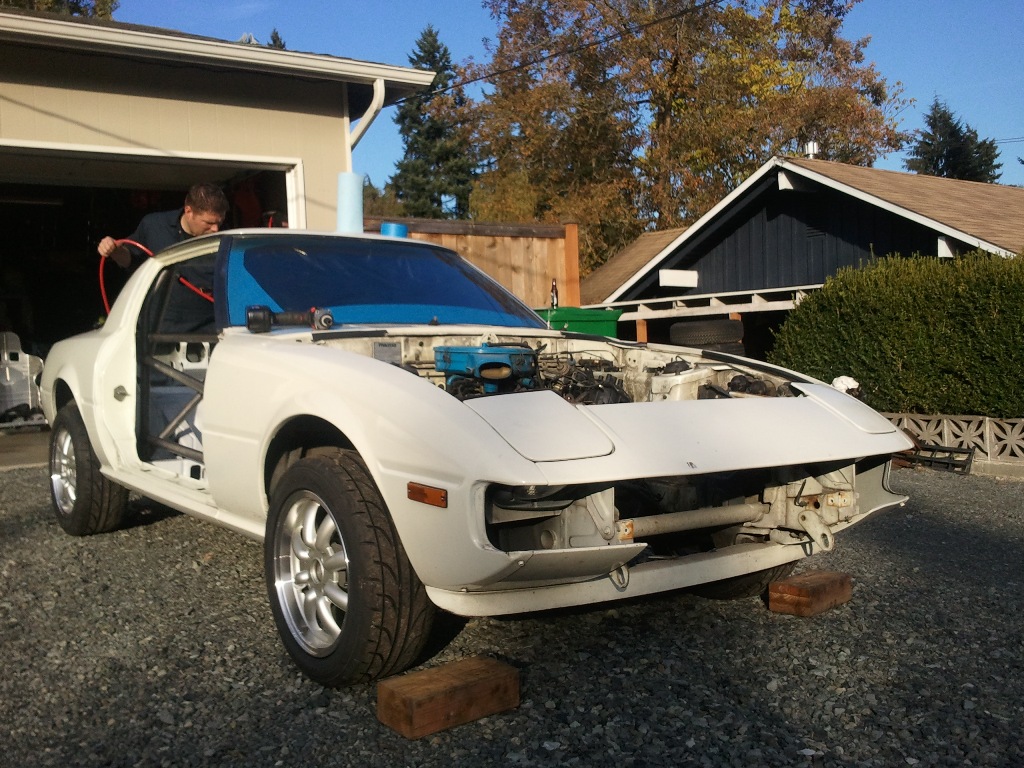
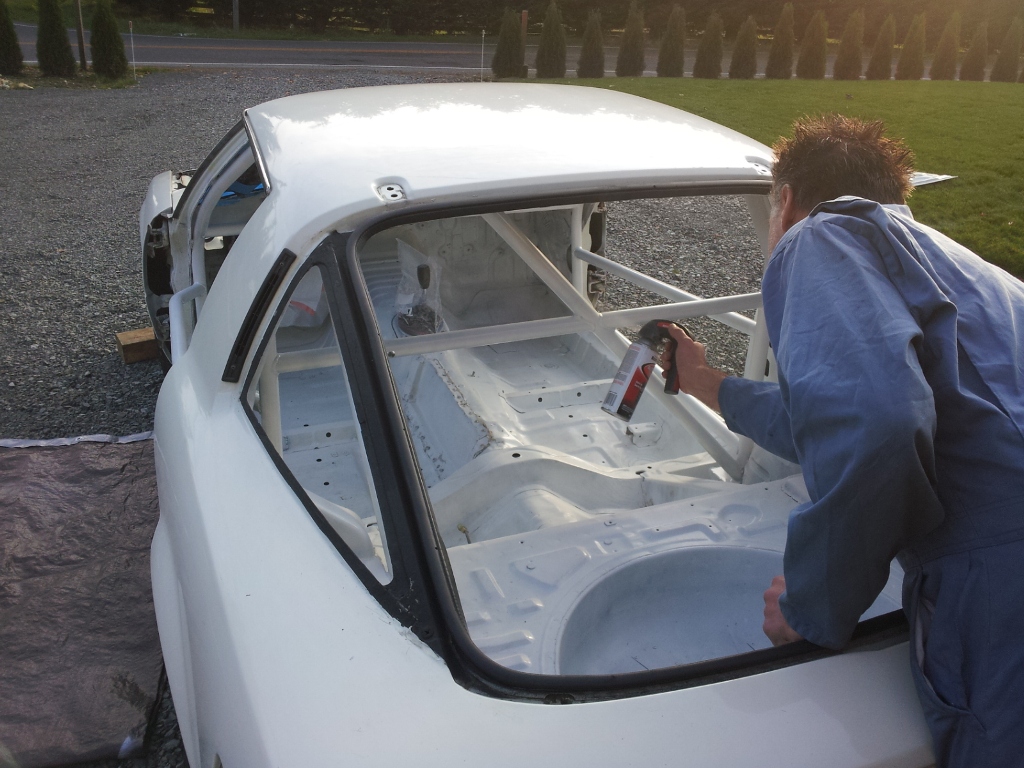
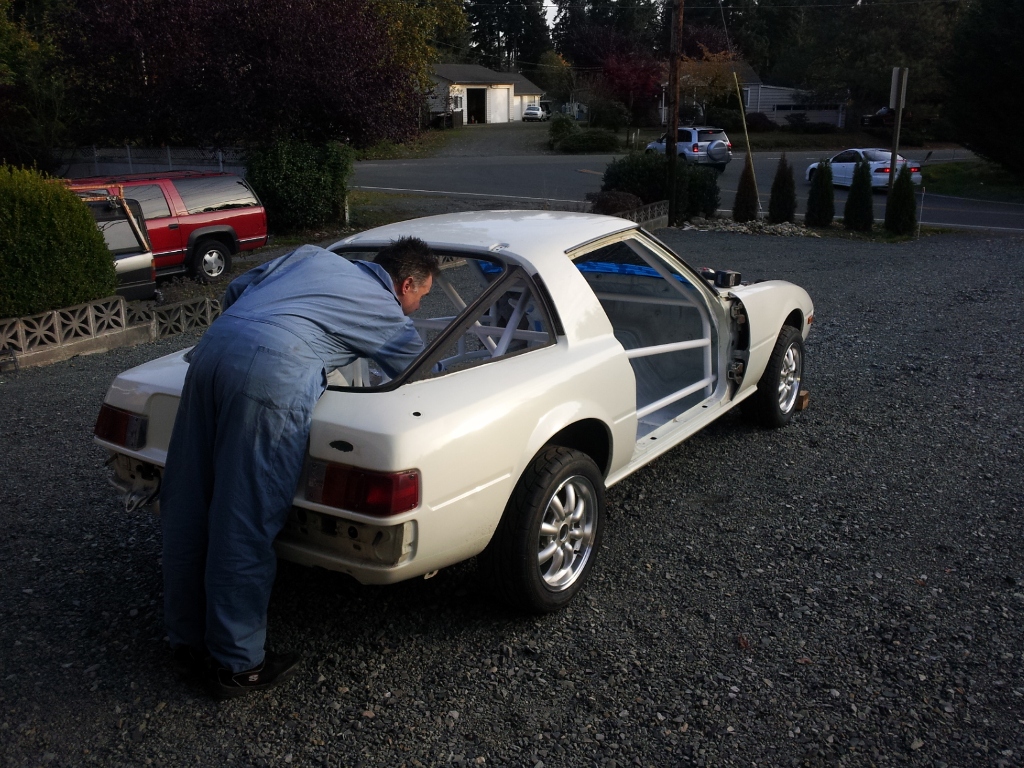
After a brief visit to Chase Race for fabrication and installation of the roll cage, we picked the car up on Saturday. Here are some pics...


 We wanted to take advantage of the unusually nice November weather to get some paint on the steel. We masked off the windshield and broke out the gloss white automotive enamel.  We only wanted enough to protect the steel from corrosion, and not to hide the workmanship on the cage.  Doug Chase did a fantastic job and we want to brag on him if anyone asks us about who did the work.  Doug took a lot of time and care to maximize the space in the car, and to make sure it's going to be as safe as possible.


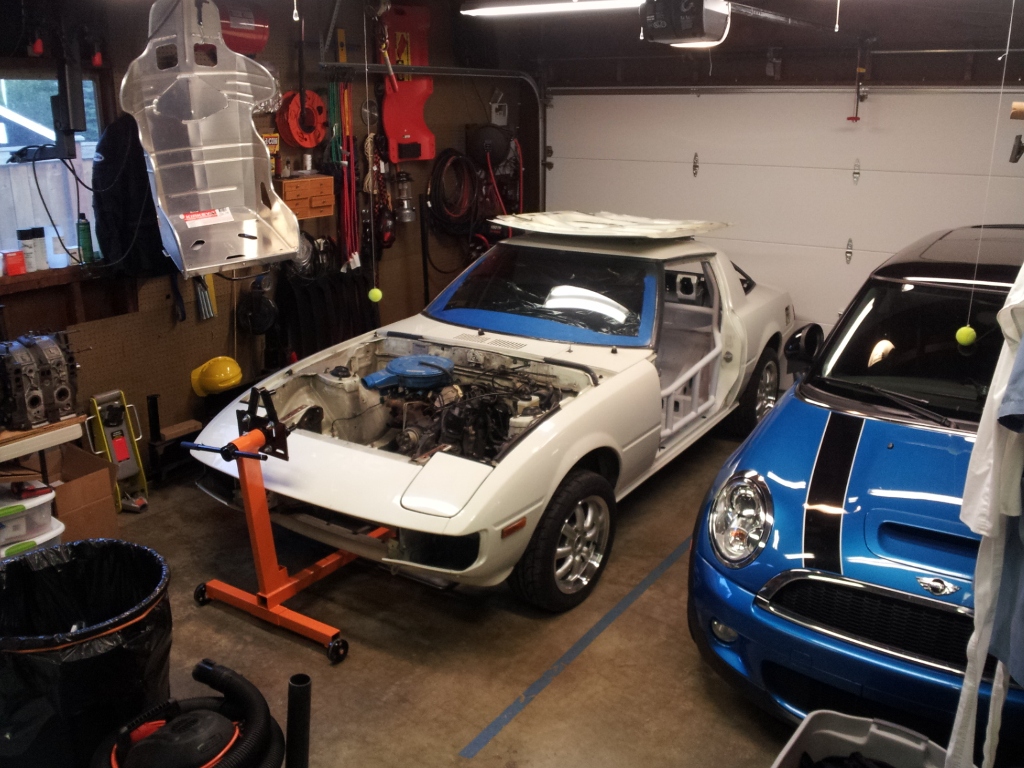
And you may have noticed that the doors and hood have been removed.  We removed them to make it easier to work on the car while its in the garage.  If you've been reading this blog from the beginning, you'll recall the "conversation" I had with my wife about moving her Mini out of the garage so we could keep the LeMon warm and dry...
.
.
.
.
.
.
.
.
.
.
.
.
.
.
.
.
.
.
.
.
.
.
.
.
.
.
.
.
.
.
.
.
.
.
.
.
.

Evicted...

Part 10b

Engine Rebuild Part 2

A beer and a Maker's on the rocks later, I was ready to take another stab at reassembling this engine. 


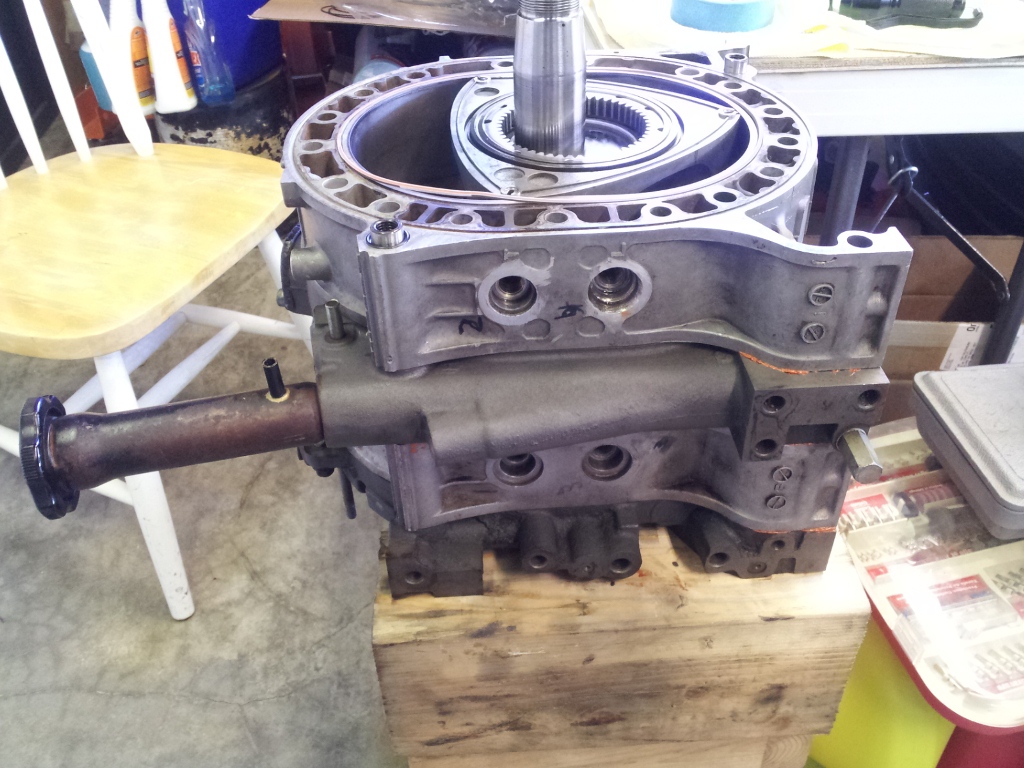
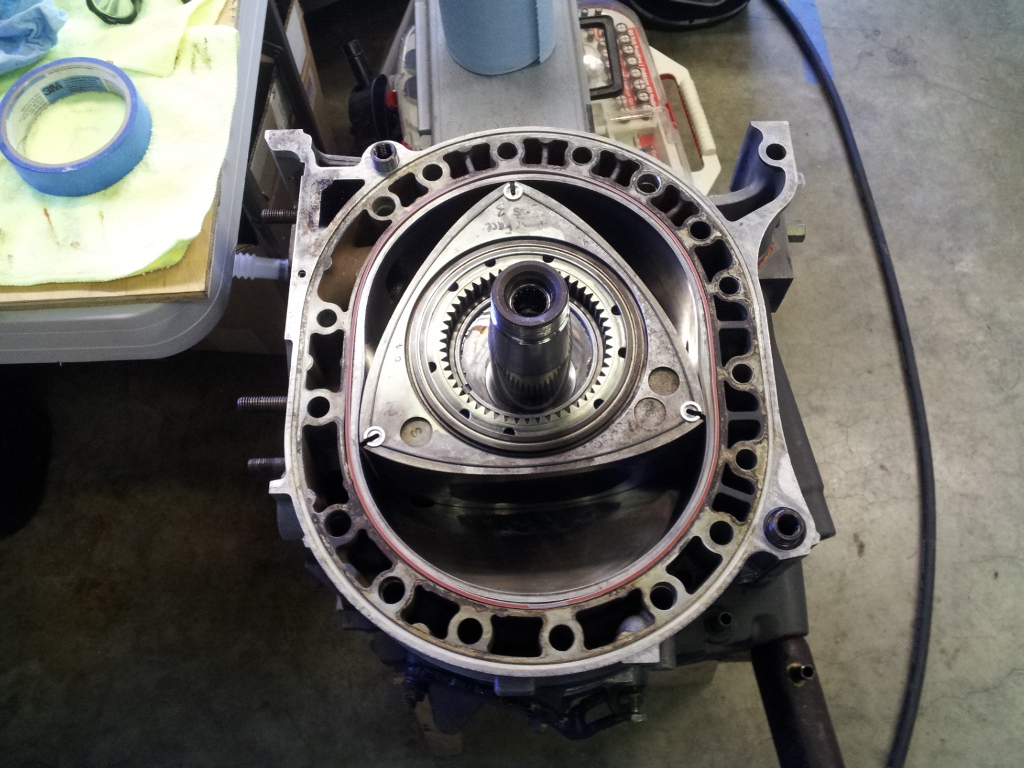
I put all the parts in order (with the rear rotor well out of reach so I don't try to install it first) and prepped all the surfaces.  I didn't get any pics of this build because they'd all look pretty much the same as the first try, just with less failure sprinkled in.  Here are some pics with the first and second rotors installed, ready to put the rear plate on.


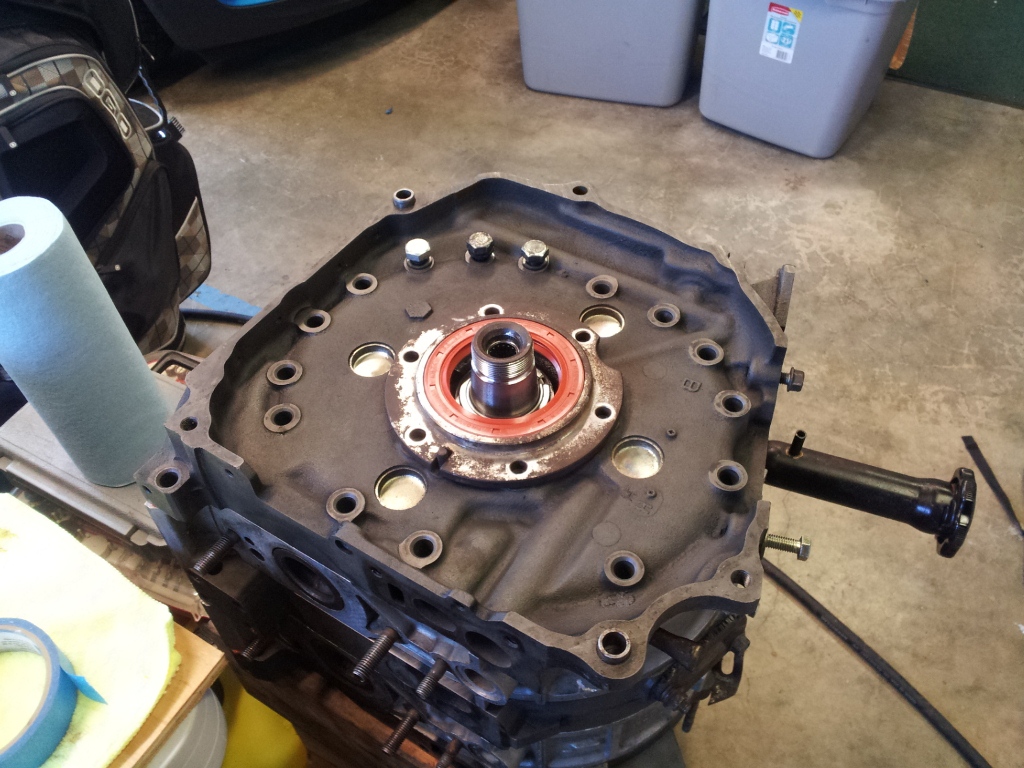
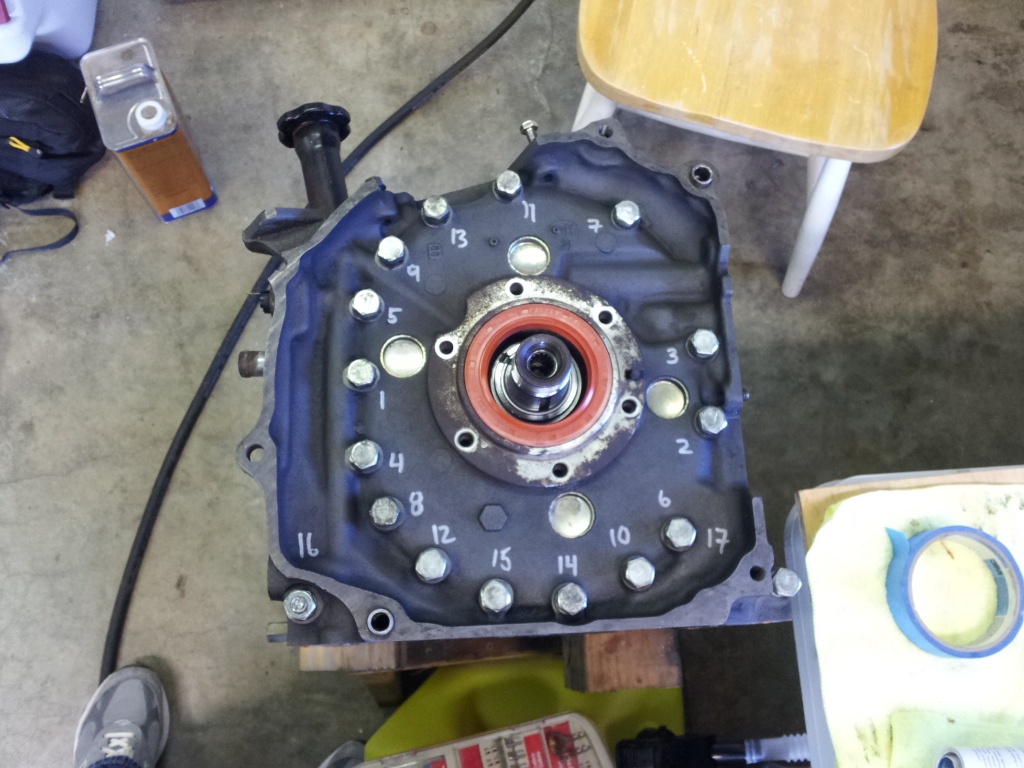
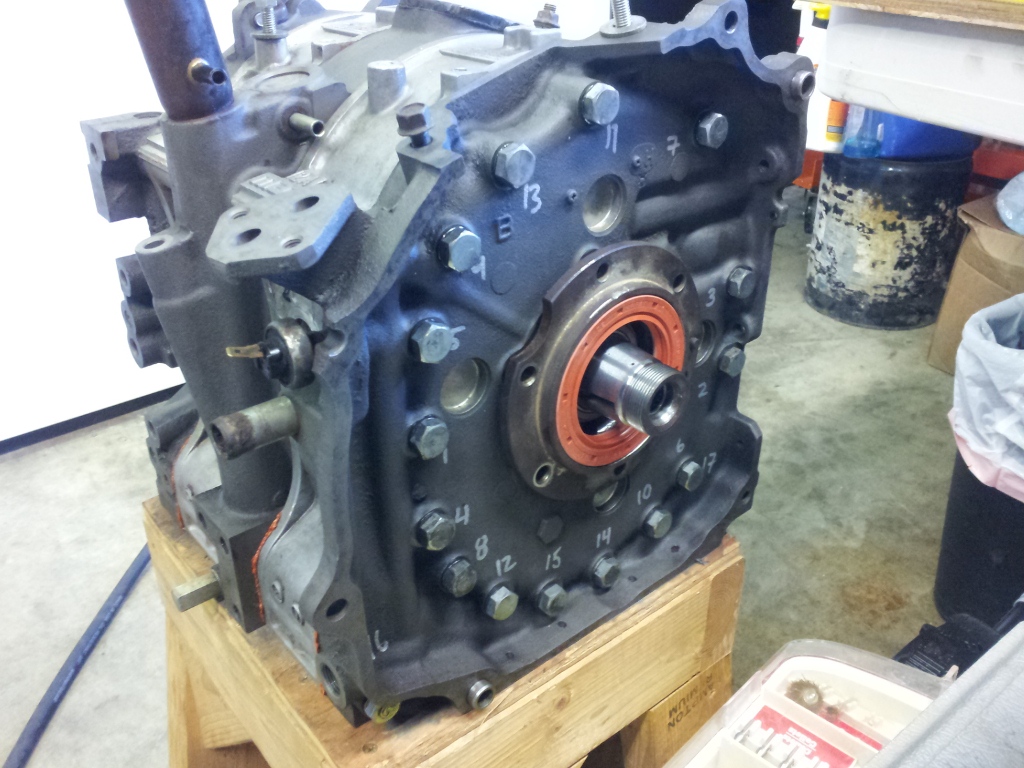
And with the rear plate installed.  Now I can start sinking all of the binder bolts in, which will suck all the sections of the motor together and set the seals.


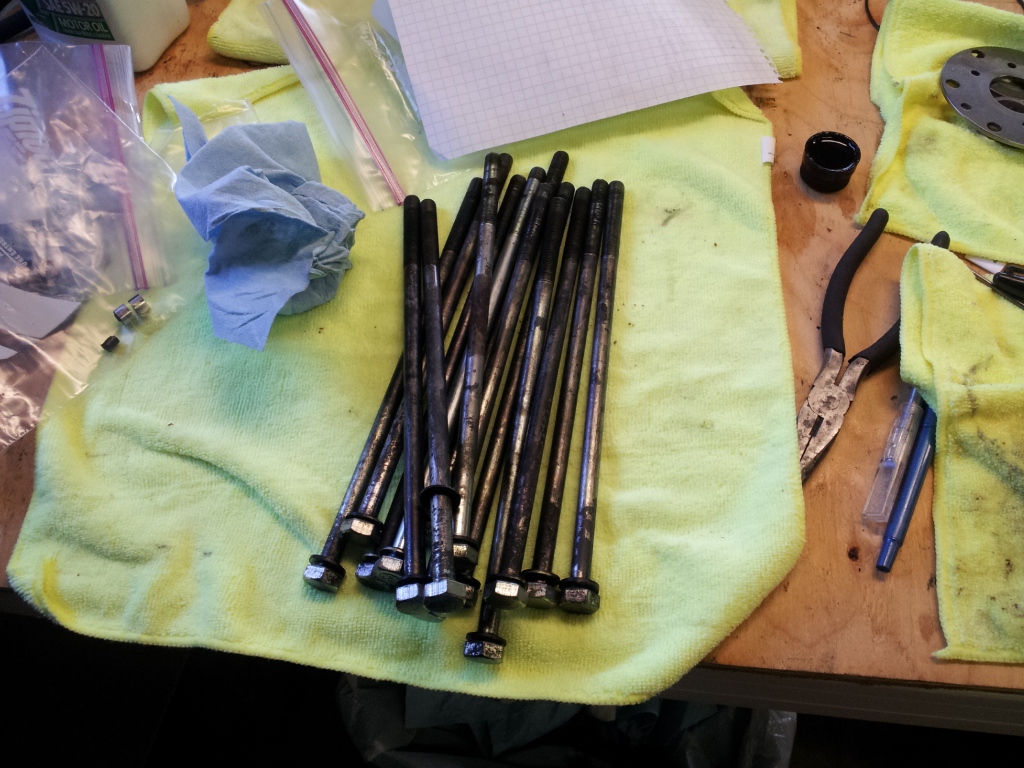
The manual specifies tightening all the binder bolts in a specific order, similar to how you'd torque the lugs on the wheels of your car.  I used a silver sharpie to mark all the bolts.
Finally! She's all back together.  AND the rotor turns!


But how well will it run?  We'll have to wait and see; there's a lot of work ahead of us still...